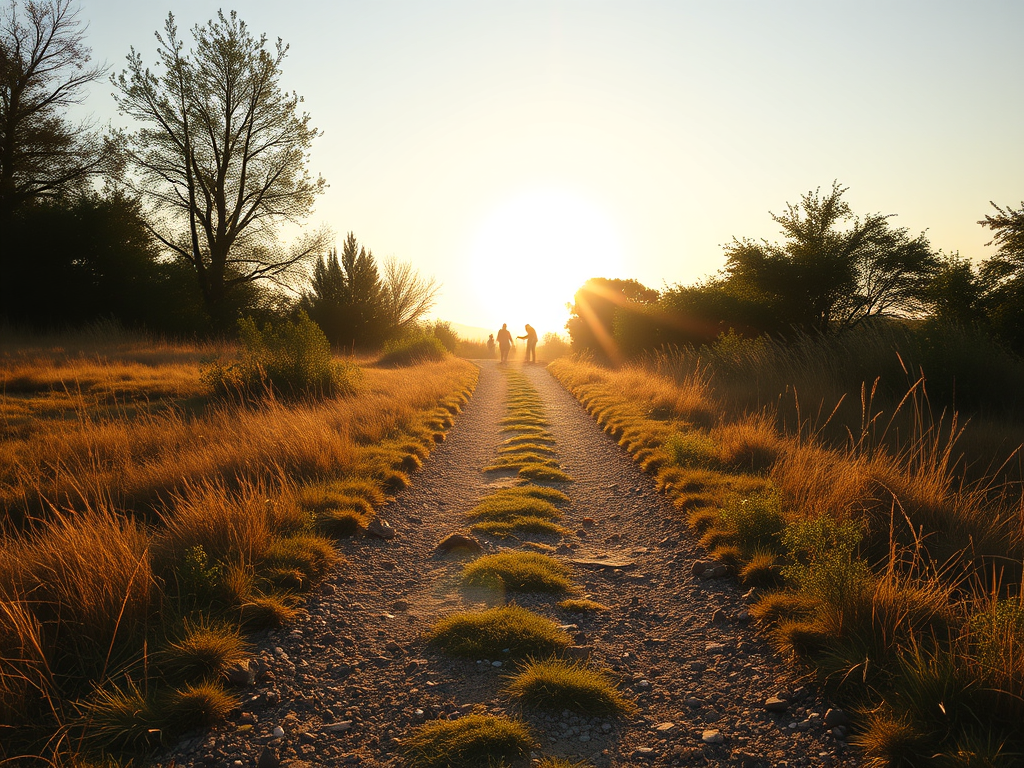
“The path of the righteous is like the light of dawn, which shines brighter and brighter until full day.” (Proverbs 4:18)
Have you ever been hurt by a critical person—someone who discouraged you just as you were beginning your walk with God?
Sadly, many of us have.
For me, the most painful wounds came from those closest to my table. The very people I still serve by the powerful grace of God. And that is only possible because I am deeply, not completely, aware of my own heart: selfish at times, arrogant at other times, quick to seek justice but slow to sacrifice, and constantly in need of mercy. Remembering this forces me to fold my pride and forgive in the same way I long to be forgiven.
I want to gently remind you of something important: accepting Jesus as Lord and Savior—being born again—does not look the same for everyone. It is a deeply personal and unique experience.
What we do all have in common is this truth:
God will never leave us. Not even once.
Whether we feel Him or not, He is there. He is present when we fall. He is patient—long-suffering with His children. And when He disciplines us, it is always out of love.
His correction is meant to teach our hearts how not to hurt ourselves again, or others, and to keep shaping us into His likeness—toward our ultimate Father, who is perfect.
Perfection is the destination, not the requirement for today.
Some days our walk resembles that light of dawn, clearly growing brighter.
But if some days our steps don’t seem like progress, we can yet TODAY pause, repent, and begin again. Because even tomorrow isn’t guaranteed, we can be faithful on the little steps today with gratitude, because from Him comes our strength and power to do so.
For the One who loved us with His very life will never abandon us. We are loved—even when we don’t feel it.
Sometimes in my life, I came to believe that some of my deepest wounds came from those closest to me. As I’ve grown older — now at thirty-one — I’ve also learned to question myself. I’ve asked whether some of that pain came from my own oversensitivity, personality traits, or emotional swings shaped by circumstances beyond my control. I’m still learning to hold these questions with humility.
Yet, as I look back, I notice something that Scripture itself does not ignore: many people whose faith has grown deeply — both in the Bible and in my own community — walked through seasons of rejection, misunderstanding, or loneliness, sometimes even within their own families or among those closest to them. This is not a rule, and certainly not a measure of spiritual worth, but it is a pattern Scripture acknowledges.
Joseph was betrayed by his brothers. David was overlooked before he was anointed. Jeremiah was warned that even those of his own household would act treacherously toward him (Jeremiah 12:6).
These stories do not romanticize pain. They remind us that God often draws near when human support falls short.
If there is one reason I am writing this short reflection, it is to remind you that you are not alone — even if those closest to you feel far away right now, for reasons you may not yet understand. You can have a Father in heaven. It is not a coincidence that you are reading this today. Write it down if you need to. I promise that one day it will make sense, even if right now you struggle to see it.
As for me, I believe I am here today because God is faithful, even after years of ignoring His gentle signs. Recently, He woke me at four in the morning to pray and read Ezekiel, and I was reminded again that He is intentional — not only with me, but with you as well. The simple fact that you are still reading tells me that your heart longs to follow Him, even if you don’t yet know where to begin, or even if your faith feels tired after a low season.
The Bible reminds us: “The Lord is close to the brokenhearted and saves those who are crushed in spirit.” (Psalm 34:18)
When I sought help to process my own experiences, I also realized how prideful I had been at times — resisting the help God places in our lives through others. God often uses people, wisdom, and even unexpected places to bring healing. Scripture tells us that “God chose the foolish things of the world to shame the wise” (1 Corinthians 1:27). We never know who God may use, or how He may work through a simple conversation, a clinic visit, or a moment of honesty.
Learning to walk with discernment has become one of the greatest tools in facing my daily internal battles, no matter where they come from. As we allow God to heal our hearts, He teaches us to forgive without denying reality, and to love without losing wisdom — all so that our lives may point back to the glory of His name, the One who saved us and loves us unconditionally.
Jeremiah lived in a time when trust between neighbors and even brothers had eroded, yet God remained faithful and near. That truth still holds.
This understanding has not hardened my heart. Instead, it has taught me to rest in God when human bonds feel fragile, and to recognize that His presence is often most tangible in quiet surrender.
And before you go, let me remind you of something simple: please eat today, even if it feels hard. Take care of your body — this temple of the Holy Spirit — because you are deeply loved and cared for, even on days when it doesn’t feel that way.
Thank you for reading this. It is not perfect or polished, but it is genuine — written from the tender places of my heart.
Sometimes all it takes to make someone uncomfortable is to ask about their faith, or how they came to know Christ. And yet, that is one of the most essential starting points of truly knowing someone who calls themselves a convicted follower of Jesus — when you can see the fruits of repentance in their life.
Some faithful pastors still dare to preach the hard sermon of the “scandal of grace,” but many of us keep our eyes, ears, and mouths sealed by what I call the syndrome of perfectionism. It is similar to being “gifted”: everyone on the outside may see the high abilities, but only the person living with it truly knows the conditions and comorbidities they must manage in secret.
Sharing our testimony can carry deep, even therapeutic, results for the soul. Sometimes it is the very thing that sets us free. Some believers are ready to speak out the good news; others may still struggle, walking through a sanctification process that makes the heart question, “Am I truly saved?” This is why I treasure Proverbs 4:18: “But the path of the righteous is like the dawning light, that shineth more and more unto the perfect day.”
(Funny enough, this reminds me of our college years — that age when we crawl on our quatro patas toward the temptations of our flesh, ready to worship ourselves in the humanistic temple of knowledge and forget the omniscience of God.)
And yet, it was precisely there — in my “Egypt” — that God allowed me to see my misery as a human being compared to His perfect holiness, despite the flaws and frustrations I saw growing up in religion itself. Being the first “redneck” on both sides of my family to make it not only into college but into one of the most prestigious federal institutions in a developing country made me realize that God was not joking when He said He would do it for the glory of His own name. I knew it in my heart, even when others suspected otherwise. He knew me when others could only see a small spectrum of the Spirit that He was regenerating in me during that season.
Growing up in church doesn’t mean much by itself, because the Bible says God already reveals Himself through nature (Psalm 19:1). Either in my first semester of college, or around 19 years old, I began to see glimpses of God’s truth in Anthropology as a social science — even though it was, at the same time, a human testimony of our idolatry (Romans 1:23). I think around 23, the clue became clearer. And by 25, I finally understood why: “It is the glory of man to discover things through science, but the glory of God to conceal them.” (Proverbs 25:2) By then, my life was already entering its second chapter.
Being born again does not always look like speaking in tongues or emotional experiences. Some people find those expressions far more interesting than salvation itself — the actual gift. Many brothers and sisters love to play with the wrapping paper around the big gift. Sounds familiar, right? Who hasn’t enjoyed the gift wrap as a child more than the gift inside? It takes a mature brother or sister to gently remind the child of the real treasure. How much more should we do that for our brothers and sisters in Christ who are still in their spiritual toddler years, while we claim to be the older siblings?
My salvation was a gift from God after He broke the yoke of my pride and self-sufficiency, allowing me to see my flaws beyond the perfect image I held of myself in comparison to the “outsiders” whom God also intends to save.
Shame can work in two ways: toward condemnation or toward genuine repentance. The difference between Judas and Peter is that one carried the image of the calling until his death sentence, while the other discovered along the way that there is no other way but Christ.
So when the walk gets heavy, we need each other as the church of Christ — forgiving as we want to be forgiven, carrying the marks of Christ daily, whether we work in visible earthly careers or in invisible heavenly callings. What truly matters is whether the Spirit of God confirms in our hearts that we are children of God.
Finding Renewal in God’s Word: A Journey of Faith and Family
Since my born-again experience about seven years ago, my life has been marked by daily transformation. Some of these changes have been subtle, unfolding slowly over time, while others were more immediate and life-changing.
At the heart of this journey are two truths:
I received a new heart after my stubborn old one failed.
I do not walk alone—the Holy Spirit lovingly guides, comforts, and strengthens me every day, even when I don’t always feel it.
On good days, I remember that my health and joy come from Him. On hard days, I rest in the truth that the deepest desire of my heart is Him.
The Power of Daily Bible Study at Home
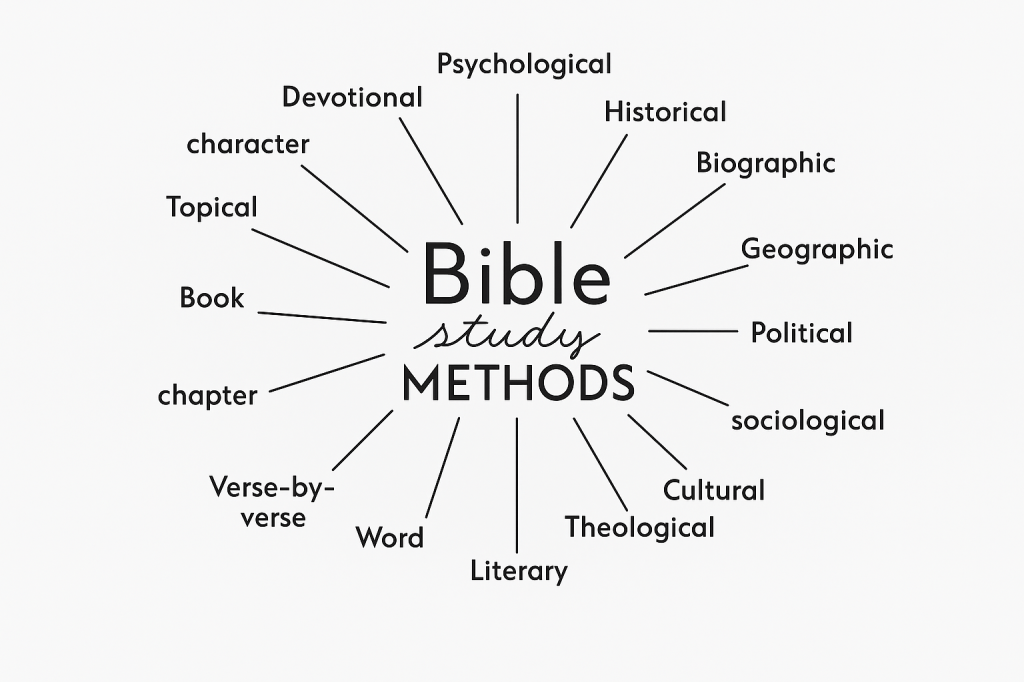
One of the greatest anchors for my soul has been the Word of God. Over the years, I’ve discovered that studying the Bible doesn’t have to look the same every day—it can flow naturally with the rhythm of life.
Reading Scripture alone early in the morning.
Sharing a one-minute devotional with my children before a meal.
Joining a weekly Bible study group at our local church.
Attending Sunday school before or after services.
Hosting small gatherings in our home.
No matter the format, God’s Word has become our safe refuge—a hidden place of peace and strength in the middle of life’s uncertainties.
A Free Printable Resource for Your Family
Because Scripture has been such a source of life for us, we prepared a free printable Bible study resource to help you and your family draw closer to God.
Our prayer is that this tool inspires you to:
Read the Bible with fresh interest.
Discover new insights that speak directly to your heart.
Experience the living water of God’s Word in every season.
Even when we thought we already knew it all, the Bible kept surprising us with new wisdom and refreshment. Truly, God’s Word is like a flourishing river—always flowing with new life for thirsty souls.
A Promise to Hold On To
“Whoever believes in me, as Scripture has said, rivers of living water will flow from within them.” John 7:38
In the secular world we live in today, God has been pushed out of the center of the universe. Many argue that religion cannot be trusted because it has been misused by humans for control and manipulation. Fair enough.
But why then do we trust science with our whole hearts, when it too can be abused by the same flawed humanity—full of bias, corruption, and the thirst for power?
Both systems, it seems, are vulnerable to the same weakness: they mix fragments of truth with distortions born from our corrupted hearts.
Albert Einstein once said: “Science without religion is lame, religion without science is blind.” (Einstein, 1941, Science, Philosophy and Religion: A Symposium). Both, in isolation, fall short.
Do We Truly Know Our Own Hearts?
Why do we believe that we fully know our own hearts? Do we ever test them?
The Bible warns that in the last days, knowledge will increase and the pace of change will only accelerate (Daniel 12:4). Yet one thing remains constant—besides God’s Word: the enemy’s strategy. From the Garden of Eden until now, he has twisted truth with lies to deceive us.
Take Eve, for example. The serpent said: “You will not surely die… you will be like God, knowing good and evil” (Genesis 3:4–5).
Half truth, half lie. Humanity did gain moral awareness—but at the cost of eternal life with God. Death entered the world (Romans 5:12). Yet even then, God gave us a choice—not robotic obedience, but the freedom to love Him willingly.
The Same Lies Today
Satan still uses the same tactics. Today we hear:
“Just be a good person.”
“Love is love.”
But how can we know what is truly good, or what love really means, apart from God who is the very source of love (1 John 4:8)?
Every religion claims to offer a path, but only Christ—the “way, the truth, and the life” (John 14:6)—bridges the gap between our sin and God’s holiness.
Testing Our Hearts
So let us test our hearts (2 Corinthians 13:5). Let us confront the lies we’ve believed and place our hope in the One who is truly good—the God who gave His own Son to rescue us.
Jeremiah 17:10 “I the Lord search the heart and test the mind, to give every man according to his ways, according to the fruit of his deeds.”
We can lie to others or even to ourselves, but we cannot lie to God. He examines our hearts daily (Psalm 7:9; Proverbs 17:3). He alone is the true “Heart Tester.”
I once thought of myself as a “good enough” person. I built my own belief system by mixing bits of the Bible with science and other religions. But it left me empty. It didn’t work.
I don’t know your background, your family, or your community, so I can’t blame you for the way you see the world. But I can share this: when I finally admitted I couldn’t trust my own heart, I found the One who could be trusted with it.
This is my testimony about truth, lies, and my own heart. The God who found and loved me like no one else also cares for you. This post isn’t a co-incidence. He has placed His love in me today so that I could offer this prayer for you. If one day you find yourself hopeless or burdened by your conscience, I want you to remember this prayer.
Would you pray with me?
Dear Lord God,
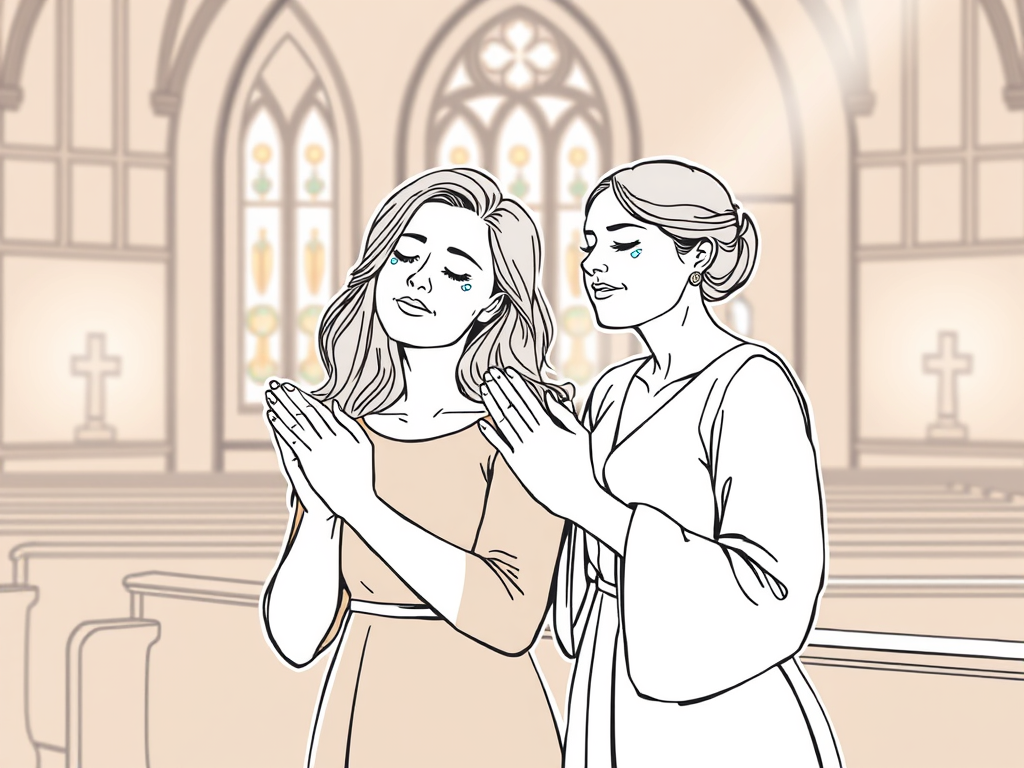
Thank You for the life of the person reading this prayer right now. I lift her up before You, Father, and I thank You for knowing her completely—her birthday, her joys, her pains, and every moment that has brought her here today, to this place of seeking You.
I ask, Lord, that You reveal to her the hope and grace that can only be found in You. Show her that there is true hope when we honestly face the condition of our hearts before You. Thank You, Lord, for choosing her before the foundation of the world, for numbering every hair on her head, and for never forsaking her.
I entrust her life into Your hands. May she come to know You as Savior and enter into an everlasting relationship with You, just as You have graciously allowed me to. Use every pain she has experienced for a greater purpose—that she might help others and bear witness to Your love and grace.
Lord, make Your presence alive and real to her as she turns her heart and mind fully toward You. Thank You for being a faithful Father—the loving parent who disciplines with purpose those You love. And thank You for removing our hearts of stone and giving us hearts of flesh, so that we may grow to be more like You and extend Your love to those You are calling to Yourself.
In Jesus’ name, Amen.
Heartwork:
Try to find someone today that you think is close to God and send them a message or give that person a call, you never know how your next steps can be already being planned by God for your good.
From personal experience, I know that for some of us, there are days when it’s genuinely hard to get out of bed. I’m very grateful to have my children—who need to be fed, entertained, taught the Lord’s ways, and protected each day. So even when I lack motivation, I still have the responsibility. I often find myself getting up not because I feel inspired, but because I must—it’s not optional.
Still, this isn’t the kind of life I want to live every day, nor is it the example I want my children to grow up watching. I know each person is different, and to be honest, some days I can’t tell if I have a melancholic personality, a deeper emotional or spiritual struggle caused by unconfessed sin, a test from the Lord, or simply laziness—which, let’s not forget, is also a form of sin. In today’s world, people often label it “procrastination” to make it sound softer or more acceptable.
On those days, I try everything I can: I start by confessing any sins I’m aware of—especially when I’m not walking in the fruits of the Spirit, and my husband gently points it out. Love, joy, peace, patience, kindness, goodness, faithfulness, gentleness, and self-control—when those are missing, I know something is off.
But sometimes I have to go deeper. I ask God honestly, “Search my heart. Is there something I’m not seeing? Is there a hidden sin blocking my energy and motivation?” Because it’s not just tiredness—I’m talking about that frustrating emptiness, that lack of energy to accomplish the tasks I’ve set for myself, and not understanding why it’s happening.
Many people choose therapy, coaching, or even medication. I’ve tried all of these throughout different seasons of my life. I’m not opposed to them entirely, and when things feel really out of balance, I go back and give them another chance. But the truth is, none of them ever fixed the root. They only helped manage the symptoms. And honestly, I’m not interested in just managing symptoms. That’s why I’ve always had some resistance to these solutions—especially as someone who comes from a lineage with traditional knowledge and natural approaches to healing.
So what should we do?
When we have a fever, it’s the body’s way of telling us something is wrong. I believe a lack of motivation works the same way—it’s a signal that something deeper might be out of alignment. Sometimes what we need is more rest. Other times, extra vitamins or nutritional support. And often, we just need time—because no two people face a lack of motivation for the exact same reasons.
That’s why it’s worth pausing and asking real questions, instead of rushing to cover the feeling. Ask yourself, “What is my body or soul trying to tell me?”
Example: Last month, I found myself overwhelmed with daily chores, homeschooling, and trying to grow my online presence. I was exhausted and bitter. I prayed, journaled, and eventually realized I was placing my value in productivity instead of resting in God’s love. That recognition alone brought so much peace—and slowly, my energy began returning.
In the end, my first step is always this: search for the truth. The Bible says the truth sets us free. Whether it’s easy to face or not, I’d rather live in that truth than remain stuck in confusion. That’s the only way I’ve ever found lasting freedom from this cycle of tiredness and lack of motivation.
Following along with me:
One activity I’ve been practicing daily — and that has helped me a lot — is reading the Word of God at least once a day. To stay consistent, what has worked for me is having a WhatsApp group with at least one family member who also wants to pursue this purpose. This companionship creates mutual accountability and encouragement.
Dayane Olson
Reading the Word transforms our mindset. It can shift the focus of our thoughts, which are sometimes stuck on things that drag us down. Moreover, it combats the lies of the enemy — those that paralyze us, confuse us, and try to make us give up. The only way to resist him is the way Jesus did: with the Word of God, not just with opinions or human strength.
Today’s challenge: Read one chapter of the Bible and send a verse that spoke to you to someone you trust. Pray for that Word to become alive in your heart.
As we near the end of the first month of our Bible in One Year journey, I feel truly blessed to share this experience with my dad and husband. Yet, despite the excitement, the close of each month has felt somewhat heavy. Whether due to postpartum hormonal changes, the long, gray winters of Germany, or the challenge of adjusting to life in a new country, I’ve had to make a conscious effort to find gratitude in the small moments—baking with the kids, quiet moments with my husband, and creating a cozy home inspired by the Hygge style.
Adapting to a New Season Living in a picturesque village near the French border, surrounded by diverse languages and cultures, has been an enriching experience. However, this season has been about more than just adapting to a new place. It’s been a time of learning to balance rest, relationships, and faith. I’ve come to cherish my morning devotionals, slow family rhythms, and the simple joys of home life. Even something as ordinary as watching 1883 with my husband has become an opportunity to reflect on history and resilience—reminders that comfort can sometimes make us weak, and hardship often strengthens our character.
Lessons from the Wilderness This season of transition has led me to reflect on the metaphor of the wilderness. I used to struggle to understand my husband’s deep love for Wyoming, a land of rugged beauty and harsh conditions. Yet, after experiencing its vastness, I realized that the wilderness holds profound spiritual lessons. Just as the Israelites wandered through the desert, longing for the Promised Land, we, too, face seasons of spiritual dryness where we must depend on God’s provision.
The wilderness teaches us to seek joy beyond our circumstances. It strips away distractions and reveals the true desires of our hearts. It is a place of testing, but also of transformation—a reminder that our satisfaction is found in God alone (Psalm 37:4).
Choosing Worship Over Circumstance Finding beauty and joy in difficult seasons is never easy. A moment of shared tears with a woman at church reminded me that, despite our struggles, we can choose gratitude. While surrendering my worries to God, I found joy in the smallest act—a piece of gum from my husband—that lightened my heart and reminded me that God’s presence is always near.
Too often, we focus on what we lack instead of who God is. Yet, the underground churches around the world inspire me with their unwavering joy, despite their suffering. True worship isn’t about comfort—it’s about delighting in God Himself. Wyoming, like life’s storms, once felt unfamiliar and harsh, yet I now miss its lessons. The wilderness reminds us to worship, not for blessings, but for the sheer joy of knowing Him.
Trusting God in Every Season Isaiah 40:31 reminds us that those who wait on the Lord will renew their strength. Even when we feel weary, lost, or unworthy, God is with us. The wilderness is not a punishment but a place where He humbles and refines us (Deuteronomy 8:15-16).
As I reflect on this journey, I am learning to embrace God’s presence in every season—whether in the German winter, the vast Wyoming plains, or the unknowns of life. May we learn to worship not just in times of abundance but in the wilderness, trusting that He is always working, always faithful.
Final Prayer Lord, thank You for Your patience, love, and unwavering presence. Even when we feel unworthy, You never abandon us. May our hearts find joy in worshiping You, not just for blessings, but for the beauty of who You are. Let us trust in Your work in our lives, and may our gratitude be a testimony to those around us—especially our children.
“Remember also your Creator in the days of your youth” (Ecclesiastes 12:1).










 V31 Ministry